
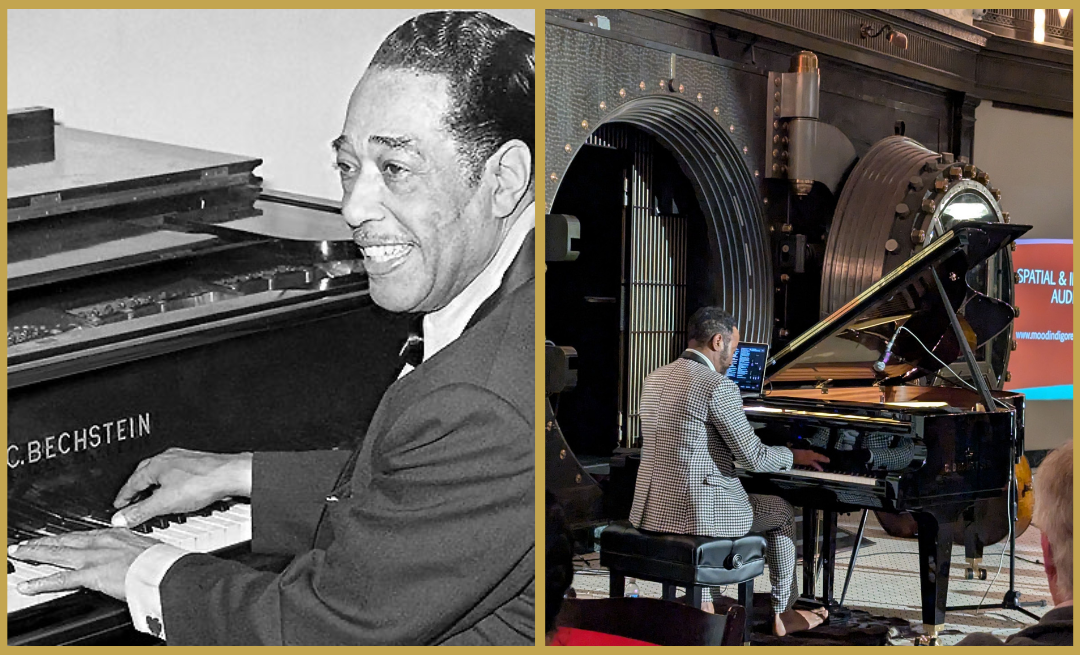
The sound of jazz piano carried through the Milwaukee County Historical Society as singer Corynn Latta’s voice rose above the room and dancer Phairra Ahmani Jones stepped into the story of Minnette “Satin Doll” Wilson. Beneath the chandeliers and carved architectural details of the historic building, Satin Jazz unfolded less like a performance and more like Milwaukee carrying its jazz history naturally into the present.
For the grand finale of the evening, Duke Ellington’s nephew Trace Ellington joined Latta and Jones for a revolutionary performance of “Satin Doll.” 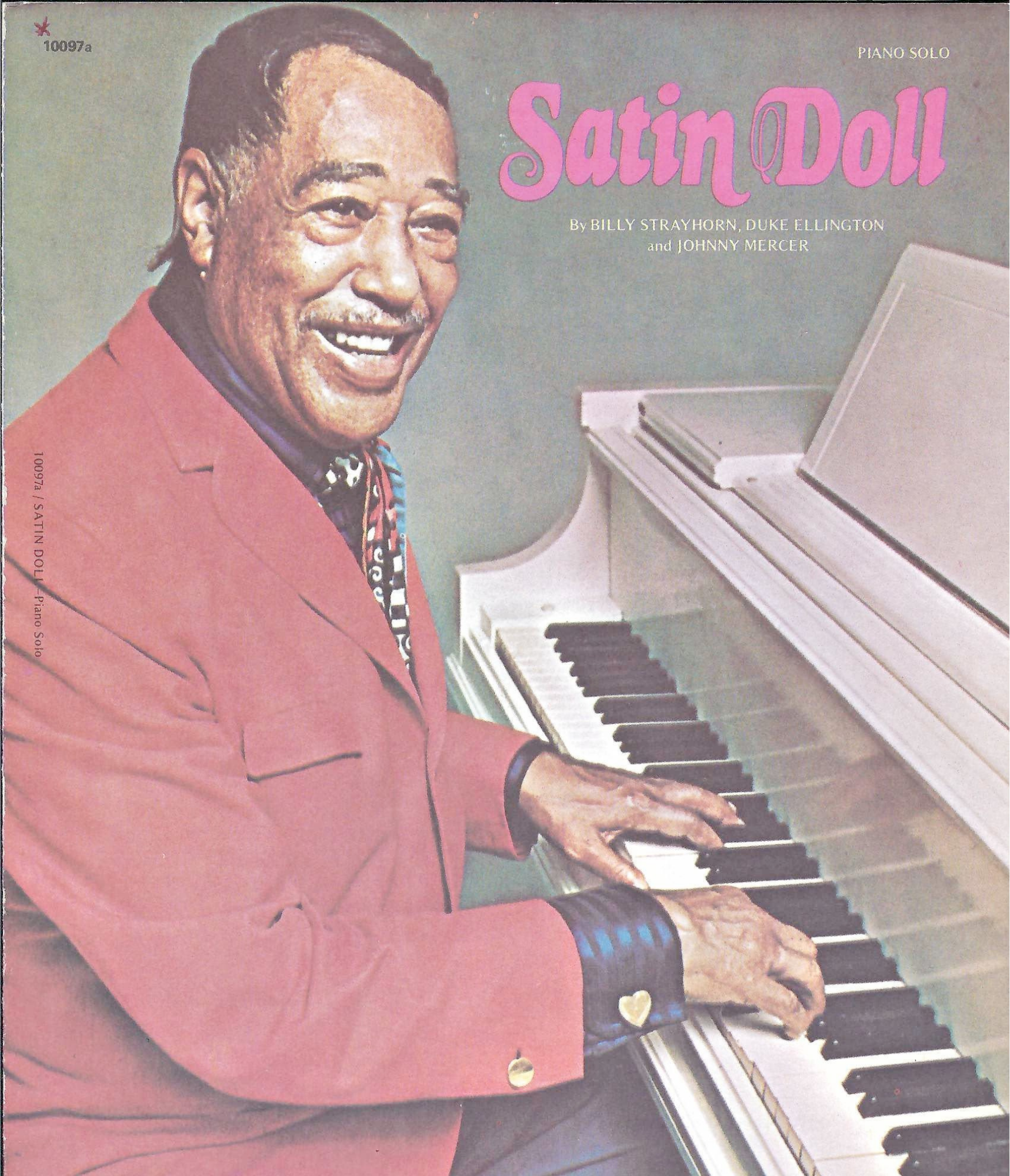
Trace’s arrangement moved through shifting rhythms, improvisation, and unexpected transitions that pushed Duke Ellington’s composition into something distinctly his own while keeping its jazz foundation fully intact. Softer passages settled through the room with warmth and clarity from the C. Bechstein grand piano before opening into sharper rhythmic movement and fuller runs that steadily pulled attention toward the stage. The instrument responded to every shift in touch and dynamics, carrying both intimacy and power through the arrangement as Jones moved across the floor beside the music and Latta’s vocals rose through the hall.
A producer, engineer, songwriter, and founder of Mood Indigo Recordings, Trace built his career across the Bay Area music scene beginning in the 1980s, working across hip-hop, soul, R&B, production, and live performance. His early work connected him to artists tied to the rise of West Coast hip-hop, including Digital Underground and Tupac Shakur, while later projects expanded into film, media, and contemporary production. Years later, he returned home to Milwaukee and re-established Mood Indigo Recordings on the city’s North Side, mentoring young artists and engineers while continuing to develop music rooted in both technical precision and live musicianship.
“Milwaukee is so rich in the jazz feel,” Trace said in an interview with WUWM.
Beginning in the 1920s, Bronzeville became the center of Milwaukee’s jazz scene, its clubs and performance spaces hosting artists like Duke Ellington, Billie Holiday, Louis Armstrong, Count Basie, and local musicians including Bucky Green and Willie Pickens. Because Black musicians were barred from many hotels during segregation, family homes throughout Bronzeville became gathering places for touring artists moving through the city, including Trace Ellington’s grandmother’s house.
“I heard the stories about the times when Duke would come to town, Count Basie, all the jazz greats,” Trace said. “And the stories, I was like, wow.”
The music surrounding those stories moved naturally through Satin Jazz itself. Jon Mroz and the Troubadours of Rhythm filled the room with arrangements rooted in early jazz performance, while the Tael Estremera Trio performed Duke Ellington compositions alongside Corynn Latta’s vocals. The sound belonged as fully to the present as it did to the era that shaped Milwaukee’s jazz culture in the first place.
Among the figures tied to Milwaukee’s jazz history, few remain as memorable as Minnette Wilson. Before her Satin Doll Lounge became a fixture on Fond du Lac Avenue, Wilson toured as a dancer with Duke Ellington. He would visit her in Milwaukee and play at her club. Milwaukee history has long regarded Wilson as the muse who inspired “Satin Doll.” In a televised performance, Duke Ellington once said, “I always say a satin doll is just as pretty inside as she is outside.”
Wilson died in 2017, but her image still hangs inside the Wisconsin Black Historical Society, another Milwaukee institution carrying the city’s Black cultural history through photographs, archives, storytelling, and community memory.
Jones honored Wilson’s memory through choreography blending jazz, contemporary movement, and burlesque influence while Corynn Latta’s vocals rose alongside the sustained resonance of the C. Bechstein grand piano during Trace’s arrangement. Softer sections of “Satin Doll” settled long enough for the room to go completely quiet before applause finally broke across the closing notes of the performance.
“As technology continues to advance, the human soul stays the same,” reads a statement on the Mood Indigo Recordings website.
The same musical soul that shaped Duke Ellington’s era continues through Trace Ellington’s reinterpretation of “Satin Doll,” through musicians carrying jazz traditions into new generations, through Milwaukee institutions preserving and celebrating Black cultural history, and through live performances that still fill the city with brass, voice, and rhythm.
Events like Satin Jazz remind audiences that cultural history is not only something preserved in archives or photographs. It also lives in performance spaces, in musicians carrying family legacies forward, in local institutions celebrating the stories that shaped their communities, and in evenings where the past and present share the same stage.
The sound of jazz piano moving through the Milwaukee County Historical Society that evening was made possible by Hulbert Piano, who provided the C. Bechstein grand piano and was honored to take part in the celebration of Milwaukee’s jazz history.
Historical details, quotations, and background information in this article were drawn from reporting by WUWM Milwaukee Public Radio, WISN 12 News, Milwaukee Magazine, Mood Indigo Recordings, and materials provided in connection with Satin Jazz and the Milwaukee County Historical Society.
Categories
Latest Posts
Sep. 01, 2026
Back to School: Is Your Child Ready for Piano Lessons?

Jul. 21, 2026
Bringing Your Family Closer Together with Music
Jun. 29, 2026
From Duke to Trace Ellington: Satin Jazz Celebrates Milwaukee’s Musical Legacy
May. 08, 2026
What Happens to a Piano in Storage Over Time?

May. 14, 2025
What are common piano myths?

Stay in the Loop
Join 3,000+ piano players and music enthusiasts who receive our monthly newsletter for piano-related articles and tips & tidbits.