
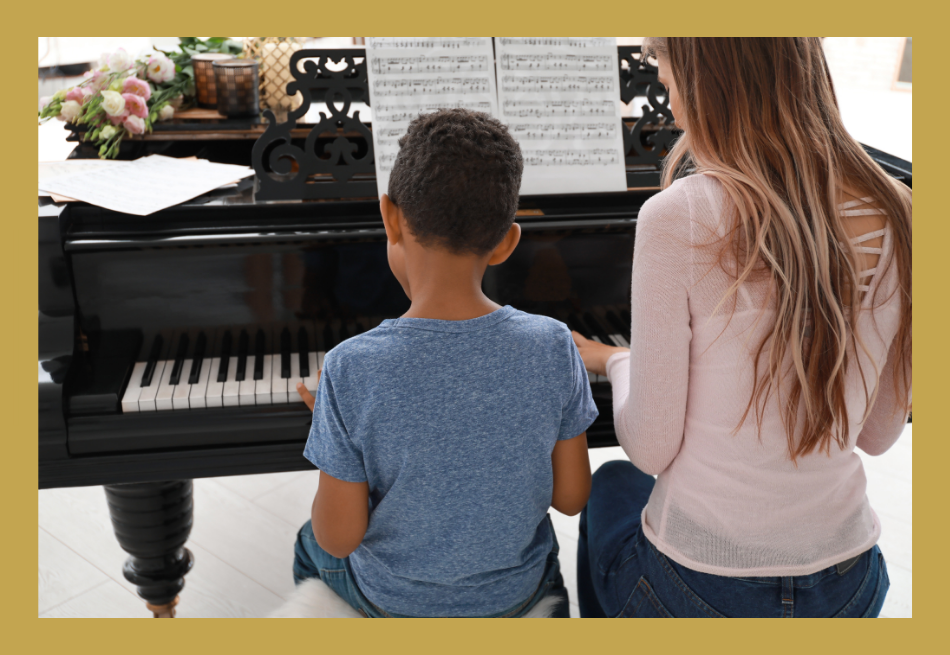
A new school year comes with decisions about how your child will spend their time outside the classroom.
Sports build physical skills and teamwork. Clubs create communities of friends with similar interests. Tutoring provides academic support. Each activity asks families to invest time, energy, and money in something they believe will benefit their child.
Piano lessons offer something different. Children learn to make music, but they also learn what it takes to become good at something.
Week after week, children experience the relationship between effort and accomplishment. Difficult notes become familiar through repetition. Mistakes become progress. A song they cannot play becomes a song they can.
Why Start with the School Year?
Back-to-school season resets the family routine.
Wake-up times change. Homework returns. Extracurricular activities fill the calendar. Families begin establishing what afternoons and evenings will look like for the months ahead.
Starting piano lessons allows music to become part of the school-year routine.
Is Your Child Ready for Piano Lessons?
Age and reading ability are only part of determining readiness. By early elementary school, many children have developed the attention, coordination, and ability to follow instructions needed for structured lessons.
Consider whether your child can recognize basic letters and numbers, follow a short sequence of directions, and use individual fingers with increasing control.
A child does not need to demonstrate exceptional musical ability before beginning lessons. They need enough developmental readiness to learn and enough curiosity to begin.
Turning Curiosity Into Sustained Interest
Give your child opportunities to explore the piano before lessons begin. Listen to piano music together. Watch someone play. Let them sit at a piano and experiment with the keys. Ask what songs they would like to learn.
Once lessons begin, continue giving your child some ownership. They might choose a favorite song to work toward, decide which piece to practice first, or spend a few minutes playing simply because they enjoy it.
Recognize effort and improvement rather than talent. Instead of “You’re so talented,” point out what created the progress: “That part was difficult yesterday, and you kept practicing until you could play it.”
The goal is not to make your child excited about every practice session. It is to give them enough ownership to discover the satisfaction of becoming better at something themselves.
Start Piano Lessons at Hulbert Piano
Turn your child’s interest into learning at Hulbert Piano. Private and group lessons are available in Brookfield for beginning through advanced students.
Students learn on high-quality pianos in acoustically designed studios with experienced professional music instructors.
As your family establishes its routine for the new school year, make piano part of it. Starting now gives your child the opportunity to turn an initial curiosity into musical ability.
Categories
Latest Posts
Sep. 01, 2026
Back to School: Is Your Child Ready for Piano Lessons?
Jul. 21, 2026
Bringing Your Family Closer Together with Music
Jun. 29, 2026
From Duke to Trace Ellington: Satin Jazz Celebrates Milwaukee’s Musical Legacy
May. 08, 2026
What Happens to a Piano in Storage Over Time?
May. 14, 2025
What are common piano myths?
Stay in the Loop
Join 3,000+ piano players and music enthusiasts who receive our monthly newsletter for piano-related articles and tips & tidbits.